Florida hard clams have rich meat with flavor ranging from sweet to slightly salty and a firm texture. Those are the attributes in the Florida Department of Agriculture and Consumer Services clam profile. A whole cooked clam, a fried clam strip and a spoonful of chowder can nevertheless give very different impressions.
The key is to identify both the clam product and the thing you are tasting. Broth, breading and cream are parts of a dish; they are not alternative names for the clam’s own meat.
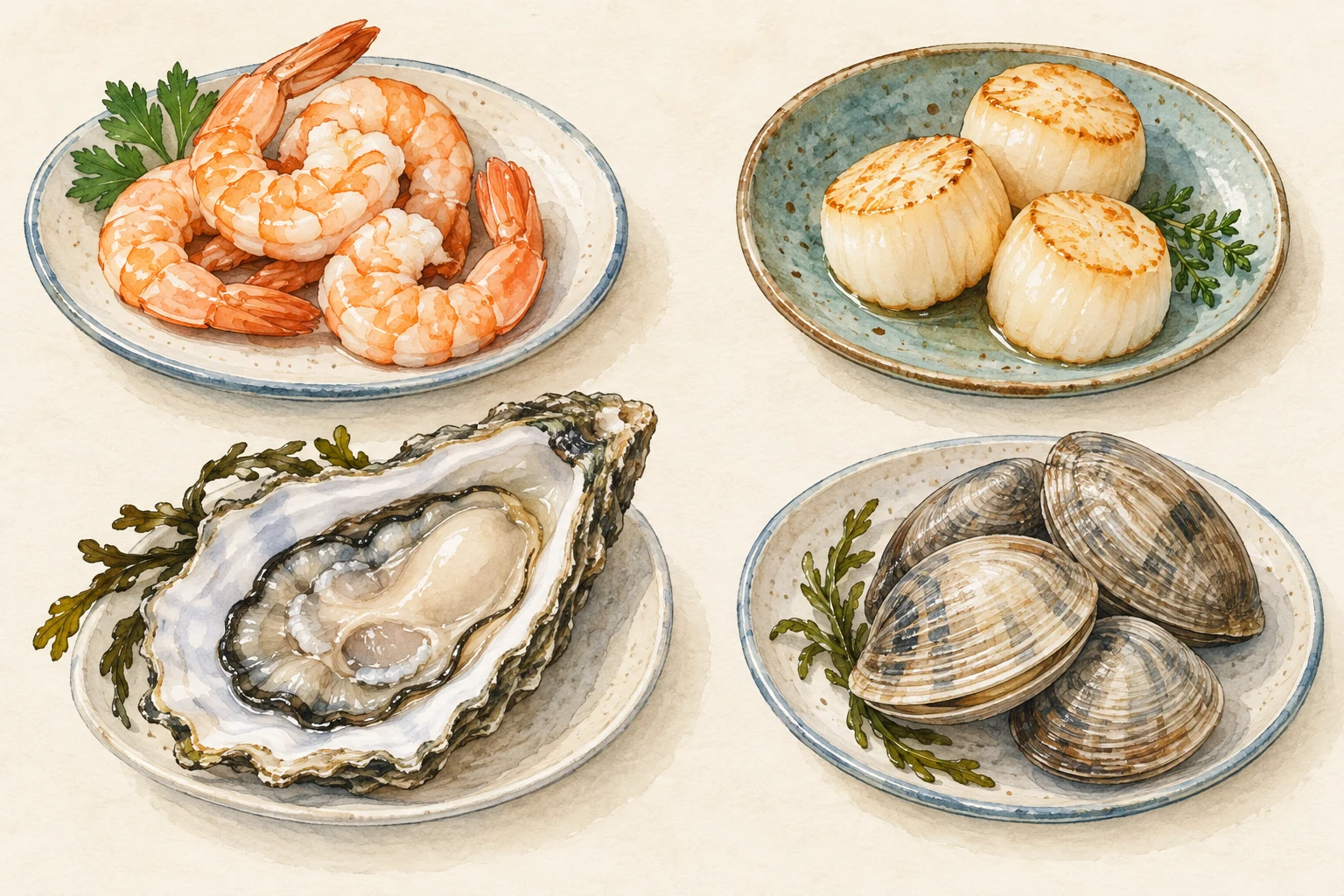
Whole hard clams and clam strips are different starting points
The Florida profile centers on hard clams, including northern and southern species in the genus Mercenaria. A shell-on serving lets you encounter a whole portion of meat. It involves taking the meat from a shell and assessing its bite, alongside whatever liquid or sauce the kitchen adds.
Processed clam products need their own description. NOAA’s Atlantic surfclam profile describes cooked surfclam meat as mild and sweet, with a chewy texture. The species supplies processed products such as breaded strips, minced clams and chowders.
That does not mean every restaurant’s clam strip comes from an identified surfclam. It gives you a concrete reason to ask: a strip may be a processed product from a different species, rather than the whole hard clam you pictured.
If your only experience is a fried strip, you have learned something about that product and preparation. You have not necessarily learned how a bowl of cooked hard clams will feel.
What is the salty or “ocean” part?
Saltiness is useful vocabulary, but “tastes like the ocean” is a broad analogy. You may be responding to the meat, the liquid around it, or added seasoning. In a bowl prepared with garlic and butter, those ingredients also contribute to the impression.
Sweetness is similarly a description of the shellfish, not a promise of a sugary mouthful. A person can notice a mild sweet character and still find a dish savory overall. There is no need to choose one word as the only correct answer.
For a useful comparison, separate three observations: the meat’s own flavor, its resistance when you bite, and the flavor of the surrounding liquid. That keeps “too salty” from becoming a complaint about texture, or “too chewy” from becoming a claim that the broth tasted wrong.
Choose a dish by the experience you want
| Dish wording | Main eating experience | Detail to confirm |
|---|---|---|
| Cooked clams in their shells | Separate pieces of meat plus the surrounding liquid | What clam type and broth or sauce are used? |
| Breaded clam strips | Processed pieces with a coating | Are these strips or whole clam meat? |
| Clam chowder | Spoonfuls of soup with clam pieces | What is the broth or cream base? |
| Stuffed clams | A clam dish combined with filling | What else is in the filling? |
The table is an ordering aid, not a ranking of flavor or quality. Someone seeking a clear view of the meat may prefer a simply seasoned cooked shell-on serving. Someone seeking a familiar soup may prefer chowder. Those choices solve different preferences.
A mixed seafood pasta offers another tradeoff: it may make clams one element among several. If your aim is to decide whether you like clams, ask how prominent they are in the dish before treating the whole pasta as a clam taste test.
Clam meat and clam broth are not the same texture
It sounds obvious, but this distinction prevents an easy mistake. A spoonful of clam-flavored liquid can introduce a flavor while telling you very little about the meat’s bite. The pieces in chowder may also be chopped; a whole clam asks more of your texture preference.
Likewise, a crunchy fried exterior describes the coating. It cannot establish how firm the clam inside will be. Ask whether the item is whole, chopped or cut into strips if that difference matters to you.
Scallops provide a different shellfish serving: the familiar rounded portion is usually an adductor muscle. Our scallop flavor guide explains that edible part without treating all bivalves as interchangeable.
If your menu offers a choice between similar shell-on dishes, compare mussels vs clams. If the choice is a half-shell or shucked serving, oysters vs clams explains those formats. Match the preparation and portion before using a broad flavor word to choose between them.
Three useful checks for a first clam order
- Identify the form: whole shell-on clams, strips, chopped meat or a soup.
- Identify the surrounding flavor: broth, cream, butter, filling or breading.
- Identify your concern: saltiness, the meat’s bite or handling shells at the table.
This is a guide to flavor and menu wording, not a raw-shellfish recommendation. A cooked dish with its ingredients clearly described is a practical starting point when you want to understand the particular clam product being served.