Oysters can range from distinctly salty to very subtle, with meat that ranges from tender to firm. The Florida oyster profile from FDACS describes that breadth for the state’s Eastern oyster. Expecting every oyster to deliver the same strong saltwater taste makes it easy to misread the dish.
Flavor and texture also need separate answers. You can like an oyster’s briny character while preferring a cooked preparation with a different exterior. You can dislike a topping while enjoying the shellfish underneath it.
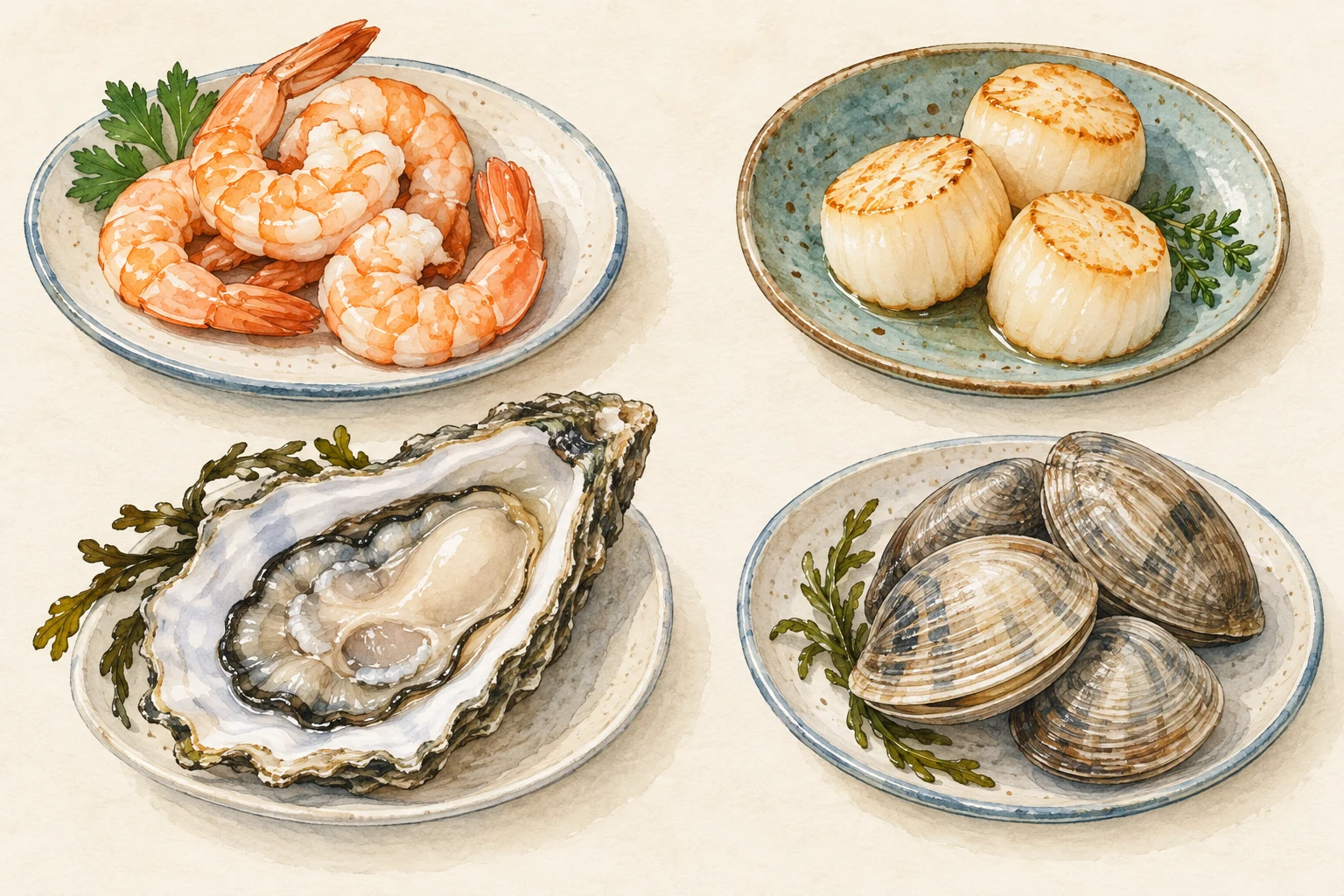
Briny is a flavor description, not a complete verdict
Briny usually describes a saltwater-like impression. It is useful vocabulary for asking about a particular oyster, but does not tell you whether you will like its texture or its preparation.
Other menu descriptions may include sweet, creamy, mineral or a named fruit or vegetable note. Read these as tasting vocabulary and analogies, rather than ingredients necessarily added to the dish. A “cucumber finish,” for example, need not mean cucumber was put on the oyster.
If a description is unfamiliar, turn it into a plain question. “Is that an ingredient or a tasting note?” is easier to act on than trying to imagine a precise flavor from a poetic phrase. Similarly, ask whether “buttery” refers to added butter or someone’s description of the mouthfeel.
There is no reason to assign a numerical sweetness or brininess score to every oyster name. A useful restaurant answer describes the product being served, rather than offering a permanent ranking of all oysters from a region.
The species name and the dish name answer different questions
FDACS centers its Florida profile on the Eastern oyster, Crassostrea virginica. That is a species. A restaurant’s place or producer name can convey another kind of information. A preparation such as fried oysters tells you how the kitchen serves them.
Keep these layers separate. “Florida oyster” does not specify breading, toppings or a cooking method. “Oysters on the half shell” describes a serving form and should not by itself be taken to mean either raw or cooked. Ask directly when that distinction is unclear.
For choosing a meal, the useful detail is whether you will get a cooked shell-on appetizer, shucked pieces with a coating, or oysters incorporated into another dish. If you are deciding between shellfish, oysters vs clams compares those serving formats and portion labels. A half-shell oyster and chopped clams in pasta answer different preferences even before flavor enters the choice.
How serving styles change what you notice
| Serving style | What becomes part of the experience | Ask before choosing |
|---|---|---|
| Cooked oysters on half shells | Shell-on presentation and any topping | What cooking method and ingredients are used? |
| Fried oysters | Coating, crunch and accompanying sauce | Is the serving an appetizer, sandwich or main course? |
| Oysters in a cooked soup or stew | The liquid, seasoning and oyster pieces | Are oysters the main ingredient or one part of a mix? |
| Raw half-shell oysters | An uncooked shellfish serving | What cooked alternative is available? |
This is a comparison of menu formats, not a claim that all cooked oysters feel identical. A crisp coating changes the outside of a serving. Butter, cheese or a sauce contributes a separate flavor. Those additions can suit your taste without being a way to judge the oyster alone.
If you previously disliked an oyster dish, describe the specific problem when choosing the next one. “I did not like the soft bite” gives a different instruction from “the topping was too strong.” That distinction is more useful than assuming the entire category is unsuitable.
Flavor cannot establish raw-oyster safety
The CDC explains that an oyster carrying harmful germs can look, smell and taste like any other oyster. Lemon juice and hot sauce do not kill Vibrio. They change seasoning, not the safety status of a raw serving.
For that reason, this guide recommends a properly cooked option for a first oyster meal. Use current food-safety guidance for cooking rather than a tasting note, a month of the year or the appearance of a platter. A pleasant briny flavor is not evidence that an uncooked oyster is safe.
A practical oyster-order checklist
- Specify cooked or raw: do not leave this to an ambiguous half-shell description.
- Ask about the actual oysters: which species or supplier description does the menu use?
- Separate ingredients from analogies: clarify unfamiliar flavor notes.
- Choose your texture format: shell-on, coated shucked meat, or pieces in a cooked dish.
- Read the additions: topping and sauce are part of what you will taste.
You do not have to identify an elaborate finish to make a good choice. Clear words for saltiness, bite and preparation are enough to select an oyster dish that matches the experience you want.