Sea scallops have a sweet, rich flavor that can be mild or briny, with firm, lean meat. That is the profile in NOAA’s Atlantic sea scallop guide. Sweetness here describes a seafood flavor, not the sugary taste of a dessert. Butter, a browned exterior or a sauce can add another layer to the dish.
The round scallop on many American plates is an edible muscle, rather than a little whole animal shaped like a cylinder. Knowing that helps explain why eating scallops feels different from eating an oyster or a clam.
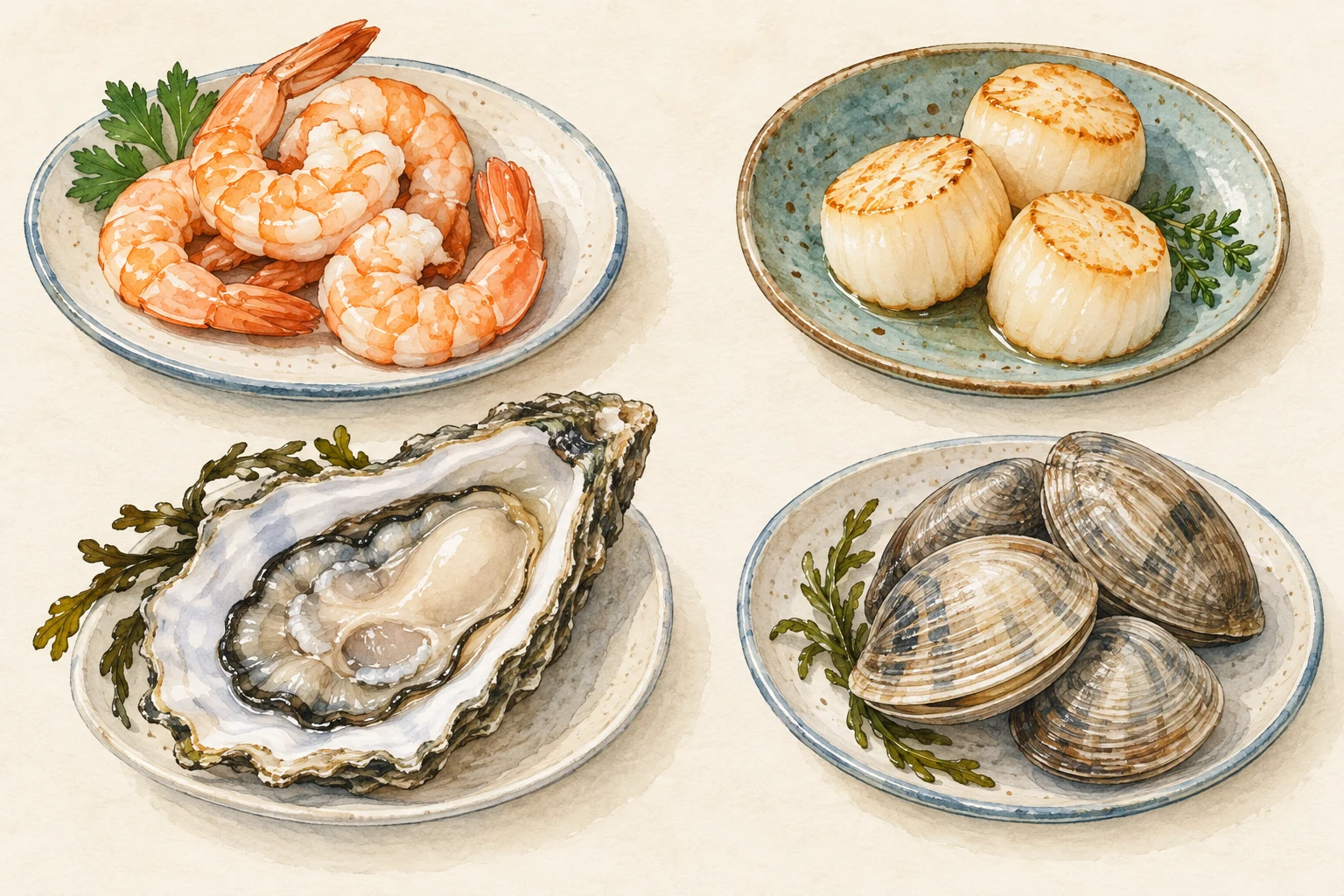
The part you eat explains the shape
NOAA identifies the adductor muscle as the part Americans typically eat. It is the muscle that closes the scallop’s two shells. The familiar rounded piece is therefore a particular edible part of a bivalve, not a miniature fish fillet.
This makes a practical difference when interpreting texture words. A fish may break into flakes; a scallop is a compact piece you cut or bite through. If you like a mouthful with a defined shape but dislike flaky fish, that distinction may be more helpful than deciding whether all seafood tastes alike.
Do not assume a photograph of white scallop meat shows the whole shellfish or identifies its species. A restaurant serving and an identification picture answer different questions.
Sweetness and brininess can coexist
Briny means a saltwater-like impression. It does not cancel out the sweet character in the published sea-scallop profile. Nor does “rich” automatically mean greasy: NOAA describes the meat as lean as well as firm.
The word buttery needs more care. It might be someone’s analogy for a pleasing mouthfeel, or it might literally describe butter in the recipe. If you want to understand the scallop itself, ask whether the menu’s buttery description refers to an ingredient.
Analogies to shrimp, crab or lobster can give a rough starting point, but cannot promise the same bite. You are choosing scallop meat, not a substitute that reproduces another shellfish exactly. Someone’s preference for shrimp also cannot guarantee that they will enjoy scallops.
Which scallop dish will give you the clearest impression?
Read the serving style alongside the seasoning so you can choose the bite you want.
| Serving description | What else you are choosing | Useful question |
|---|---|---|
| Seared scallops | A cooked surface as well as the meat | Is the sauce underneath or served separately? |
| Breaded or battered scallops | Coating and crunch | Are these whole pieces or a mixed fried seafood serving? |
| Scallops in pasta | Sauce, pasta and the number of pieces | Are the scallops the main feature or one ingredient? |
| Scallop skewer | Several pieces and any accompanying ingredients | What marinade or seasoning is used? |
For a first comparison, a cooked serving with clearly listed seasoning makes it easier to separate the meat from the rest of the plate. A rich cream sauce can be exactly what you want, but liking that dish does not necessarily tell you how you feel about plain scallops.
The same applies if you dislike a preparation. A coating you found heavy is a reason to choose a different exterior; it does not establish that the scallop’s own flavor was the problem.
A pink or orange tint is not a sweetness ranking
NOAA notes that raw sea scallop meat can have a natural orange or pinkish tint without a change in taste or quality. Uniform pure white is therefore not a reliable way to rank flavor.
That observation is narrow: it addresses a documented natural color variation. It is not a food-safety test or permission to disregard product handling. Likewise, a browned seared surface tells you something about the preparation, not which scallop species was harvested.
Bay, sea and calico are different scallop labels. Confirm the product when a menu matters to your choice; this flavor introduction does not assign every type a universal sweetness position. For a size and serving decision, use bay vs sea scallops. For product treatment, use dry vs wet scallops. These answer different questions: which pieces suit your dish, and how the product was processed. Neither is settled by a color-based sweetness guess.
Before you order
- Confirm the product. Does the menu specify sea scallops or another type?
- Choose the exterior. Decide whether you want a simply cooked surface or coating.
- Read the sauce. Identify added butter, cream, citrus or seasoning as parts of the dish.
- Clarify the serving. A main course of pieces is different from scallops dispersed through pasta.
The most useful expectation is sweet-to-briny seafood in a compact, firm piece. The preparation determines how much of that character remains at the center of the meal.