A Cuban sandwich commonly combines roast pork, ham, Swiss cheese, pickles and mustard on Cuban bread. Tampa’s traditional version also includes Genoa salami. Bread, the balance of fillings and the restaurant’s pressing method help determine the sandwich you receive; a city name does not settle every detail.
For a first order, establish whether the menu offers a traditional build or a house variation. That is more useful than trying to choose a winner in the Tampa–Miami rivalry before you know what is on the plate.
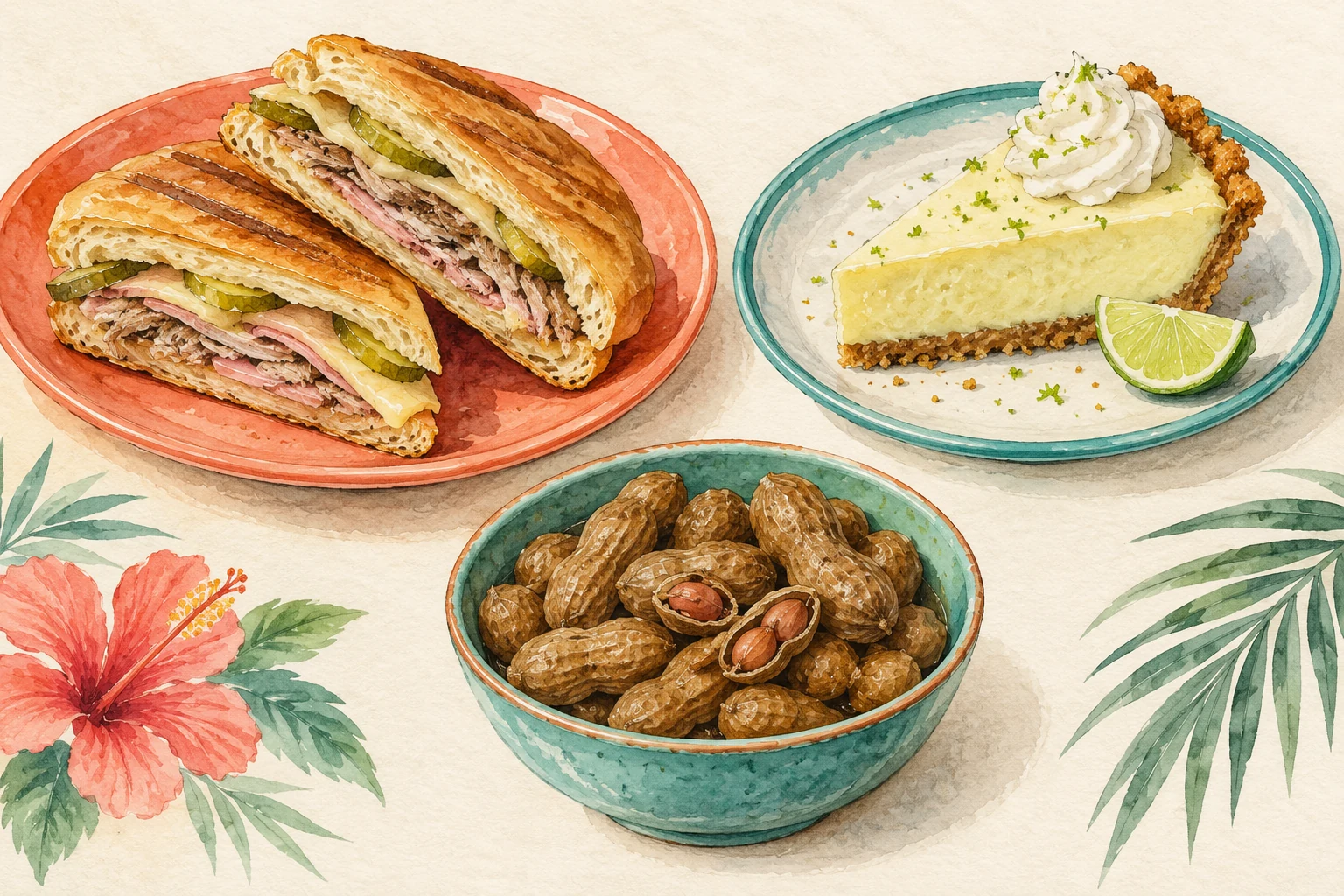
What is inside?
The Columbia Restaurant’s own recipe specifies ham, roast pork, salami, Swiss cheese, pickles and mustard on Cuban bread. Visit Tampa Bay identifies the same ingredient group as the local signature. These describe the Tampa tradition and a named restaurant’s version, rather than rules for every sandwich sold statewide.
| Part of the sandwich | What it contributes to the choice | Question worth asking |
|---|---|---|
| Cuban bread | The bread format surrounding the filling | Is this Cuban bread or another roll? |
| Roast pork and ham | Two distinct meat components | Are both included, and is the pork mojo-seasoned? |
| Genoa salami | A distinguishing Tampa-style addition | Does this version include salami? |
| Swiss cheese | A named cheese component | Is Swiss used or has the kitchen substituted another cheese? |
| Pickles and mustard | Tang and seasoning | Is the spread plain mustard or a house mixture? |
| Pressing | How the bread and filling arrive together | Is it pressed to order or served another way? |
A variation can be enjoyable without matching Columbia’s recipe. The point is to identify the change before ordering, especially if you expect a particular bread or filling.
Tampa versus Miami: use the distinction carefully
Salami is the most useful short menu question. Tampa’s published signature build includes it; a Miami-style description commonly omits it. But the name of a city is not an ingredient label for every restaurant within that city.
The tourism directory itself illustrates variations. It describes Soul de Cuba Café using a mustard-mayo spread and Independent Bar and Café using spicy German mustard. Columbia, by contrast, explicitly excludes mayonnaise, lettuce, tomato and turkey from its own original recipe. Those are different published versions, not evidence that every sandwich containing mayonnaise is fraudulent.
If you have a preference, describe it plainly: “I want the pork-and-ham version with salami and yellow mustard,” or “I would like the version without salami.” Then let the menu and kitchen confirm whether it can be ordered that way.
Bread and pressing deserve their own questions
Columbia identifies La Segunda as a longstanding bread supplier and emphasizes proportion rather than an overstuffed sandwich. That gives you a concrete example of a restaurant treating the complete build as important.
Do not assume that the biggest-looking sandwich contains the most satisfying balance for your taste. More meat, a different roll or extra sauce can change the order substantially. Likewise, a photograph cannot establish whether the bread will have the texture you prefer when it reaches your table.
For takeout, ask whether the sandwich is pressed when you collect it and how the kitchen suggests carrying it. Arrange the meal around pickup and your next stop rather than using a fixed promise about how long every pressed sandwich stays crisp. If you are sharing, confirm whether the order can be cut before it is wrapped.
A Cuban sandwich is not a medianoche
The two share familiar pork, ham, cheese, pickle and mustard fillings, but a medianoche uses a sweeter, softer egg bread. Choosing between them is therefore a bread-and-bite decision as well as a filling decision. Our medianoche comparison addresses that choice without repeating the regional sandwich debate.
Do not interpret medianoche, meaning midnight, as a guarantee that a restaurant serves it late at night. A dish name and a venue’s service hours answer different questions.
Order a meal, not a regional trophy
Before committing to a stop, check these details together:
- The actual build: pork, ham, cheese, salami, pickles and spread.
- The format: a whole sandwich, half portion or combination with another dish.
- The included sides: compare a sandwich alone with a complete plate fairly.
- The current location and service: a directory example is a starting point for checking the venue.
Origin stories remain contested. A MICHELIN interview with Columbia’s owners documents the restaurant’s place in that history, but this guide does not award one person or city a universally accepted invention date. For lunch, the clearer decision is the bread, filling and portion you actually want.