Florida’s broad orange season runs from September through June, with different varieties covering different parts of that window. It does not mean every orange variety is available for ten months. Early-season fruit and later Valencias give a shopper different choices across the year.
For a Florida-grown purchase, combine three checks: the typical harvest calendar, the named variety, and the seller’s actual availability. A fruit stand’s opening date or a gift-box preorder does not independently establish that the fruit you want has been harvested.
The broad Florida citrus calendar
The Florida agriculture department publishes typical windows and explicitly notes that weather can affect harvest. These are planning references, not live inventories.
| Crop | Typical statewide window | How to use it |
|---|---|---|
| Oranges | September–June | Ask which variety is being harvested or sold |
| Grapefruit | September–May | Check the particular type and seller’s season |
| Tangerines | September–May | Expect individual varieties to have narrower windows |
| Strawberries, for a separate fruit stop | December–April | Check the farm or dessert seller’s own offering |
UF/IFAS’s Florida Fresh orange guide also describes September–June availability through early-, mid- and late-season types. That succession explains the broad range better than imagining one crop of identical oranges lasting all year.
Which oranges should you look for in winter or spring?
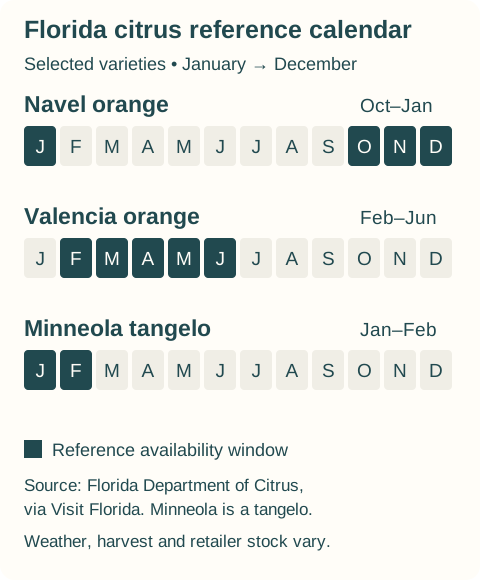
VISIT FLORIDA’s variety guide, supplied by the Florida Department of Citrus, lists navels in October–January and Valencias in February–June. It places Minneola tangelos, often called Honeybells, in January–February.
Those details make a winter citrus stop different from a late-spring stop. If your priority is a specific variety, choose dates with that variety in mind and verify supply. If the trip date is fixed, ask what is in season then rather than insisting on a fruit outside its usual window.
Retail calendars can be narrower. For example, FloridaOrange’s own guide describes its holiday citrus and spring Valencia offerings and promotes advance gift orders. Its schedule describes that business’s offer; it is not a replacement for a statewide crop calendar.
Harvest, shop stock and shipping are different dates
A harvest window concerns fruit on farms. Stock concerns what a particular shop currently offers. A shipping window concerns when a business dispatches a package. These can overlap without being identical.
For a citrus gift, ask when the box is expected to ship, not just when you can pay for it. A preseason preorder can be useful, but it is different from fruit ready for immediate pickup. Check the destination and delivery information for the exact product before using it for a birthday or holiday.
For a trip, a general harvest season also does not guarantee public picking. A commercial grove, a fruit shop, a farm tour and a U-pick operation provide different experiences. Confirm which one you are booking or visiting.
What about oranges sold during summer?
Seeing oranges in a Florida supermarket outside the state’s broad harvest window does not prove they were grown locally. Check the package or display origin and variety. A store’s location tells you where you are shopping, not where the fruit was harvested.
Similarly, bottled juice and fresh fruit answer different shopping needs. If the goal is a seasonal fruit experience, ask about the fruit itself instead of inferring harvest timing from a juice display or souvenir label.
Plan a useful citrus stop
- Choose your purpose: fresh fruit, a juice stop, a gift shipment or a picking activity.
- Match the variety to the date: use the broad calendar as a starting point.
- Verify the actual seller: check stock or the booking option you need.
- Ask about origin: especially when Florida-grown fruit is the reason for the purchase.
- Check transport or delivery: follow the seller’s directions for your order.
If you are already at a stand with several choices, use our orange variety guide for peel, seeds and juice differences. This page helps you choose when to shop; the variety comparison helps you choose what to buy once actual fruit is available.