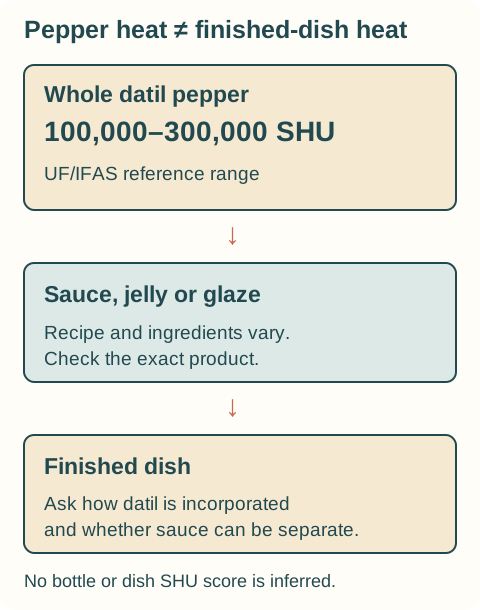
A datil pepper is a small, hot pepper associated with St. Augustine, Florida, valued for fruity, sweet-tangy flavor as well as heat. The whole pepper is hot: UF/IFAS gives a reference range of 100,000–300,000 Scoville heat units, similar to habanero and Scotch bonnet peppers. A sauce or finished dish containing datil can taste very different from the pepper itself.
That distinction matters when you see datil chowder, a honey-datil glaze or a souvenir bottle. The ingredient’s name identifies the pepper; it does not tell you how much the cook used or how hot the complete product will be.
Recognizing the pepper
UF/IFAS Gardening Solutions identifies datil as Capsicum chinense. The fruit starts green and becomes orange at maturity. The university’s county guide describes small fruit with variable shapes, including oblong and rounder forms.
Sweetness in this description is a flavor note, not a promise of mildness. You can appreciate a pepper’s fruitiness while finding its heat stronger than you want. Likewise, a golden color cannot establish the heat of an individual pepper, and a red-looking sauce may get its color from other ingredients.
Pepper, sauce and dish are three different choices
| What you are considering | What the name tells you | What still needs checking |
|---|---|---|
| Fresh datil pepper | The pepper variety | Whether you want a concentrated hot ingredient at all |
| Datil hot sauce | Datil features in a condiment | Other peppers, acidity, sweetness and the maker’s heat description |
| Datil mustard or barbecue sauce | A familiar condiment with datil | The base condiment and intended use |
| Datil jelly | A sweet preserve featuring pepper | Whether the sweet-and-hot combination suits your meal |
| Datil glaze on shrimp or chicken | A sauce is part of the dish | Whether it is mixed in, brushed on or available separately |
| Minorcan clam chowder | A regional soup commonly seasoned with datil | The kitchen’s heat level and complete broth ingredients |
The UF/IFAS county guide documents hot sauces, jellies, relishes, barbecue sauces and mustards. These are useful shopping categories, not interchangeable products.
Do not apply the whole pepper’s Scoville range to every bottle. A bottle needs its own reliable product information before you can give it a numerical heat rating. A marketing word such as “sweet” or “original” is also insufficient to compare two brands.
A practical first taste in St. Augustine
Start with a format you already understand. If you like condiment sampling, ask a shop whether it offers a sample of the product you are considering. If you prefer a meal, read how datil enters the dish before choosing it.
For a concrete menu example, Florida Cracker Cafe’s published menu describes a shrimp dip with local datil and offers a honey-datil glaze addition to a chicken sandwich. Its Minorcan clam chowder is described as spicy and tomato-based. These are examples of different formats on one menu, not a claim that their heat is identical or that an item will remain available on every visit.
If heat is the deciding factor, a separately served condiment gives you a different decision from soup with seasoning already incorporated. Ask whether the kitchen can provide sauce separately; do not assume that a prepared chowder can be made unseasoned on request.
Buying a bottle to take home
Use this sequence rather than choosing solely by a dramatic label:
- Read the ingredient list. Determine whether you are buying hot sauce, mustard, jelly or another product.
- Ask about the exact bottle. A vendor’s description of one sauce need not apply to its entire range.
- Check the producer and origin. “St. Augustine style” does not by itself prove where the peppers were grown.
- Read storage instructions. Follow that product’s label after opening rather than treating all pepper condiments alike.
- Match the package to your trip. Consider whether you are eating locally, driving home or carrying a liquid through an airport.
Why St. Augustine?
Florida’s Historic Coast documents the pepper’s role in local cooking and Minorcan food traditions. Its arrival story is debated: UF/IFAS explicitly says the exact origin is unknown. The cultural connection is clearer than a single proven introduction date.
Datil is not restricted botanically to one city. The practical reason to seek it in St. Augustine is the local food tradition and range of preparations. Choose the preparation you want to experience, then check that particular sauce or dish.